
MBBS Programme

Begin Your Journey in Medicine

Study medicine in an environment that brings together academic learning, practical training, clinical experience and compassionate patient care. The Bachelor of Medicine and Bachelor of Surgery (MBBS) programme at Sri Balaji Medical College, Hospital & Research Institute prepares students to become competent, ethical and socially responsible medical professionals.

150 MBBS Seats NEET-UG Admission NMC Curriculum
Course Bachelor of Medicine and Bachelor of Surgery (MBBS)
Duration 4½ Years Academic Study + 1 Year Compulsory Rotating Internship
Annual Intake 150 Students
Admission Basis NEET-UG
Affiliating University Dr. N.T.R. University of Health Sciences, Vijayawada
Regulatory Framework National Medical Commission (NMC)
Mode of Study Full-Time
Campus New Airport Road, Renigunta, Tirupati, Andhra Pradesh

Medical Education with Purpose

Learn. Practise. Care.

The MBBS programme at Sri Balaji Medical College, Hospital & Research Institute is designed to provide students with a strong foundation in medical sciences and progressive exposure to clinical practice.

Students learn through classroom discussions, laboratory exercises, demonstrations, clinical postings, bedside teaching, community-based learning, seminars, case presentations and supervised patient-care experiences.

The programme follows the competency-based medical education framework prescribed by the National Medical Commission and the academic regulations of Dr. N.T.R. University of Health Sciences, Vijayawada.

Our objective is to develop medical graduates who can:

  • Apply scientific knowledge while diagnosing and managing health conditions.
  • Deliver preventive, promotive, curative, palliative and rehabilitative care.
  • Communicate respectfully with patients, families and healthcare teams.
  • Practise medicine with integrity, empathy and professional responsibility.
  • Recognise the healthcare needs of individuals and communities.
  • Continue learning and adapting throughout their professional careers.
The SBMCH Learning Experience

From Medical Science to Patient Care

Medical education at SBMCH extends beyond textbooks. Students progressively connect scientific concepts with clinical situations through an integrated learning environment.

Competency-Based Education

Students develop defined medical competencies through structured teaching, supervised practice and continuous assessment.

Early Clinical Exposure

Clinical orientation helps students understand the relevance of basic medical sciences to patient care from the early stages of the programme.

Integrated Learning

Related concepts from different subjects are connected through case discussions, demonstrations and interdisciplinary teaching.

Skills and Simulation Training

Students practise essential clinical and communication skills in a supervised setting before applying them during patient care.

Community-Based Education

Field visits and community postings introduce students to public health, disease prevention and healthcare delivery at the community level.

Ethics and Communication

Professional values, medical ethics, communication skills and responsible conduct remain integral to the programme.

Your MBBS Learning Journey

A Progressive Path to Clinical Competence

1

Foundation and Basic Medical Sciences

Students begin with an orientation to the medical profession and develop a foundation in subjects such as Anatomy, Physiology and Biochemistry. The learning process introduces professional behaviour, communication, basic clinical skills and early clinical exposure.

2

Disease Processes and Therapeutics

The next stage focuses on understanding disease mechanisms, medicines, infections, pathology, forensic medicine and their clinical applications. Students begin to participate more actively in hospital and laboratory-based learning.

3

Community and Core Clinical Training

Students receive structured exposure to Community Medicine and major clinical disciplines. Clinical postings help them learn history-taking, examination, case presentation, diagnosis and principles of patient management.

4

Advanced Clinical Practice

Senior students undertake extensive training in Medicine, Surgery, Paediatrics, Obstetrics and Gynaecology, Orthopaedics and allied specialties. The emphasis is placed on clinical reasoning, decision-making, teamwork, emergency response and responsible patient care.

5

Compulsory Rotating Medical Internship

After successfully completing the academic programme and university examinations, students undergo a one-year compulsory rotating medical internship in accordance with applicable regulations. Internship provides supervised responsibilities across major clinical departments and helps graduates consolidate the knowledge, skills and professional attitudes required for medical practice.

Clinical Training

Learn Where Healthcare Happens

The attached teaching hospital provides students with opportunities to observe and participate in supervised clinical care. Bedside teaching and departmental postings help bridge the gap between theoretical knowledge and real-world medical practice.

Clinical learning may include:

  • Outpatient and inpatient clinical postings
  • Patient history-taking and physical examination
  • Clinical case discussions and presentations
  • Emergency and casualty exposure
  • Operation theatre observation and training
  • Intensive care exposure
  • Maternal and child healthcare
  • Diagnostic and laboratory services
  • Community health centre postings
  • Preventive and public health activities
  • Compulsory rotating internship

All clinical activities are conducted according to the student’s level of training and under appropriate faculty supervision.

Departments Supporting MBBS Education

Pre-Clinical, Para-Clinical and Clinical Departments

Departments and teaching arrangements are subject to the approvals and academic requirements applicable to the institution.

Academic and Clinical Facilities

An Environment Created for Medical Learning

Lecture Halls

Spacious teaching areas support lectures, demonstrations, presentations and interactive academic sessions.

Departmental Laboratories

Laboratories help students understand scientific principles through demonstrations, experiments and practical exercises.

Skills Laboratory

A controlled learning environment enables students to practise clinical procedures, communication and emergency-response skills.

Central Library

Students have access to textbooks, reference materials, medical journals and digital learning resources supporting academic and research activities.

Anatomy Learning Facilities

Structured facilities support the study of human anatomy through demonstrations, models, specimens and practical sessions.

Teaching Hospital

The attached hospital provides supervised clinical exposure across multiple medical and surgical specialties.

Diagnostic Services

Laboratory medicine, imaging and other diagnostic services help students understand the role of investigations in clinical decision-making.

Community Training

Community-based learning introduces students to primary healthcare, health promotion, disease prevention and national health programmes.

Eligibility and Admission

Eligibility for Admission

Applicants seeking admission to the MBBS programme must satisfy the eligibility requirements prescribed by the National Medical Commission, Dr. N.T.R. University of Health Sciences and the competent counselling authorities.

The general requirements include:

  • Completion of 10+2 or an equivalent recognised examination.
  • Study of Physics, Chemistry, Biology/Biotechnology and English as required under the applicable regulations.
  • Completion of the prescribed minimum age by the notified cut-off date.
  • Qualification in NEET-UG for the relevant admission year.
  • Participation in the applicable centralised counselling process.
  • Fulfilment of category-wise qualifying marks, reservation requirements and other conditions notified by the authorities.

Eligibility rules, qualifying percentiles and admission requirements may be revised. Applicants should follow the official notification issued for the relevant academic year.

Admission Pathway

Six Steps Towards Your Medical Education

STEP 1NEET-UG
STEP 2Qualify
STEP 3Counselling
STEP 4Web Options
STEP 5Seat Allotment
STEP 6Admission

Appear for NEET-UG

Register for and attend the National Eligibility-cum-Entrance Test.

Qualify in the Examination

Secure the required percentile or score applicable to your category.

Register for Counselling

Complete registration through the counselling authority specified for the relevant seat category.

Exercise Web Options

Select colleges and courses according to the notified counselling procedure.

Receive Seat Allotment

Seat allocation is carried out based on eligibility, NEET rank, category, choices and applicable regulations.

Report and Complete Admission

Report within the stipulated time for certificate verification, fee payment and completion of admission formalities.

Admission is made only through the authorised counselling process. The college does not guarantee seats outside the procedure prescribed by the competent authorities.

Documents Required

Documents Generally Required

Applicants may be required to submit original documents along with the prescribed number of photocopies. The final list will be communicated at the time of admission.

  • NEET-UG admit card
  • NEET-UG scorecard or rank card
  • Counselling allotment order
  • Class 10 certificate or date-of-birth proof
  • Class 12 or Intermediate marks memorandum
  • Transfer certificate
  • Study and conduct certificates
  • Migration certificate, where applicable
  • Category or community certificate, where applicable
  • Income certificate, where applicable
  • Residence or local-status certificate, where applicable
  • Aadhaar card or approved identity proof
  • Passport-size photographs
  • Medical fitness certificate
  • Anti-ragging affidavits
  • Other certificates prescribed by the university or counselling authority

Important Information

Assessment and Academic Progress

Student performance is assessed through a combination of:

  • Theory examinations
  • Practical and clinical examinations
  • Internal assessments
  • Viva voce
  • Skill-based assessments
  • Clinical case presentations
  • Logbooks and records
  • Assignments, seminars and group activities
  • University examinations

Students must maintain the prescribed attendance, academic performance, professional conduct and clinical requirements to become eligible for university examinations and progression through the course.

Student Development

Professional Development

Preparing Doctors for a Changing Healthcare Environment

Along with medical knowledge and clinical ability, students are encouraged to develop:

  • Effective patient communication
  • Teamwork and leadership
  • Ethical decision-making
  • Research awareness
  • Scientific presentation skills
  • Digital and information literacy
  • Community responsibility
  • Respect for patient dignity and confidentiality
  • Commitment to lifelong learning

Academic activities may include seminars, journal clubs, case discussions, workshops, conferences, health-awareness programmes and community outreach initiatives.

Student Development

Life Beyond the Classroom

Medical education requires discipline and sustained academic effort, but student development also benefits from a supportive campus environment.

Subject to institutional schedules, students may participate in:

  • Sports and fitness activities
  • Cultural programmes
  • Student clubs and academic forums
  • Health camps and outreach programmes
  • Observance of national and international health days
  • Research and scientific presentations
  • Professional-development activities

The institution promotes respectful conduct, inclusiveness, discipline and a safe learning environment. Ragging in any form is strictly prohibited.

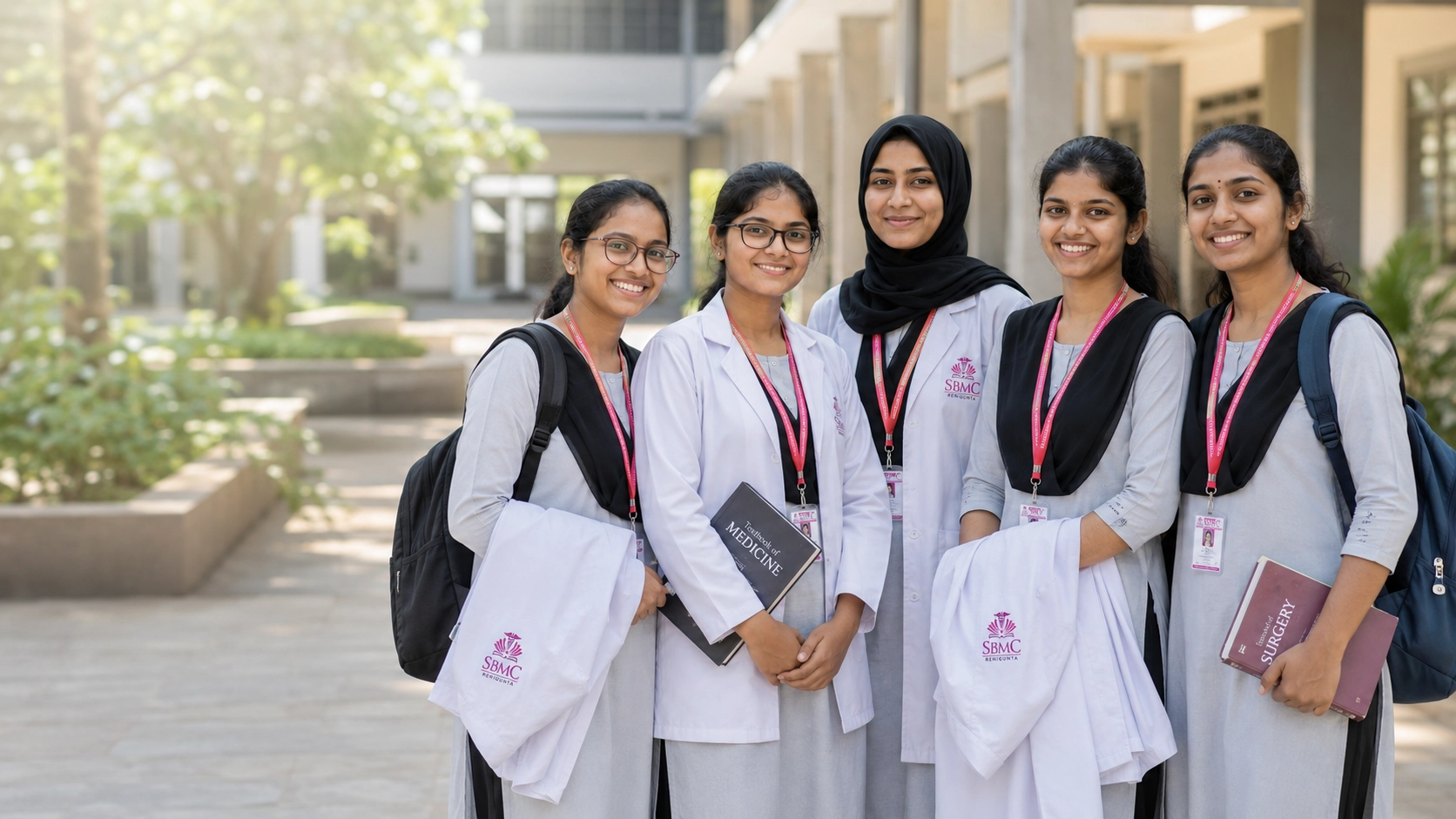
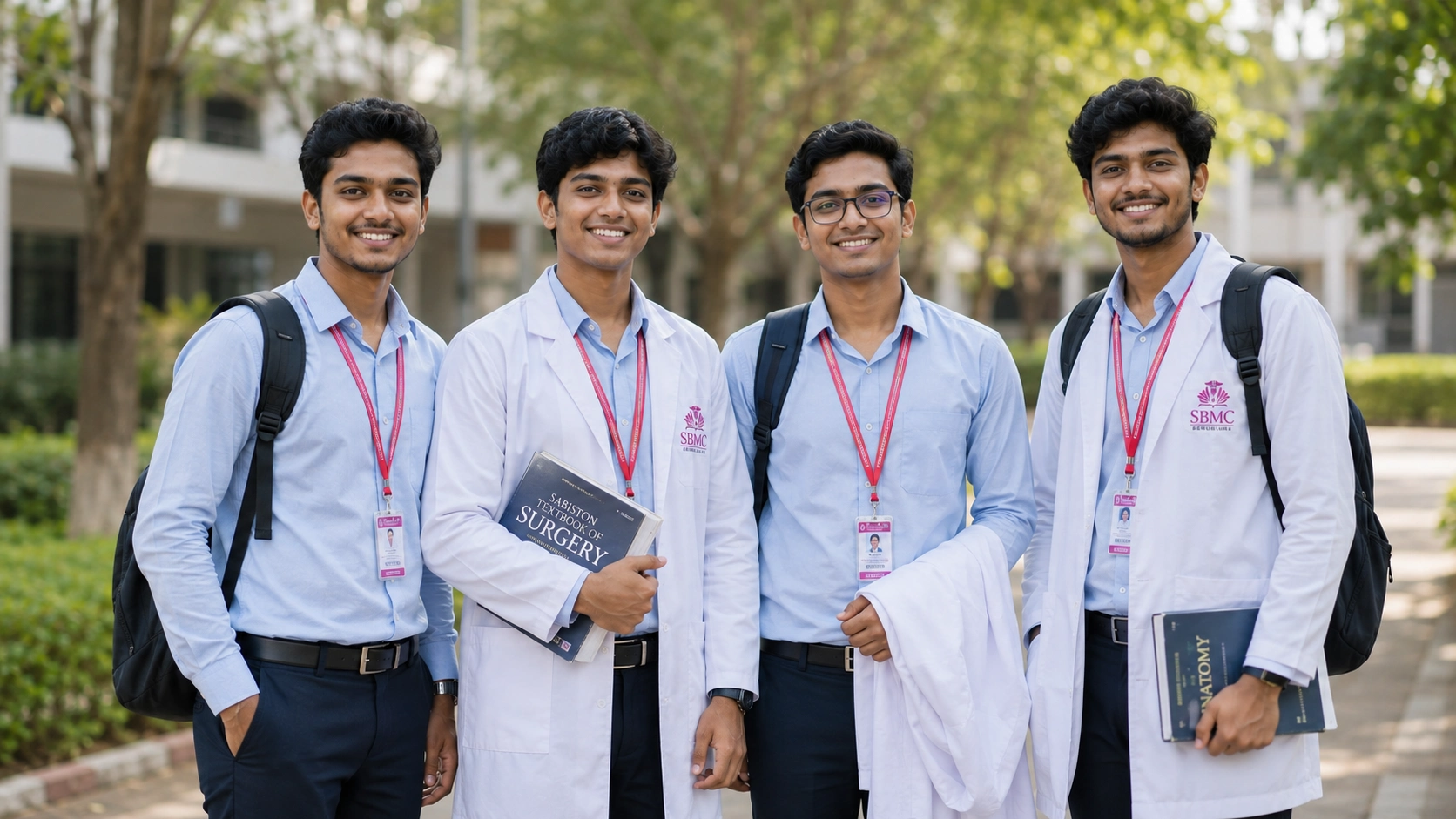
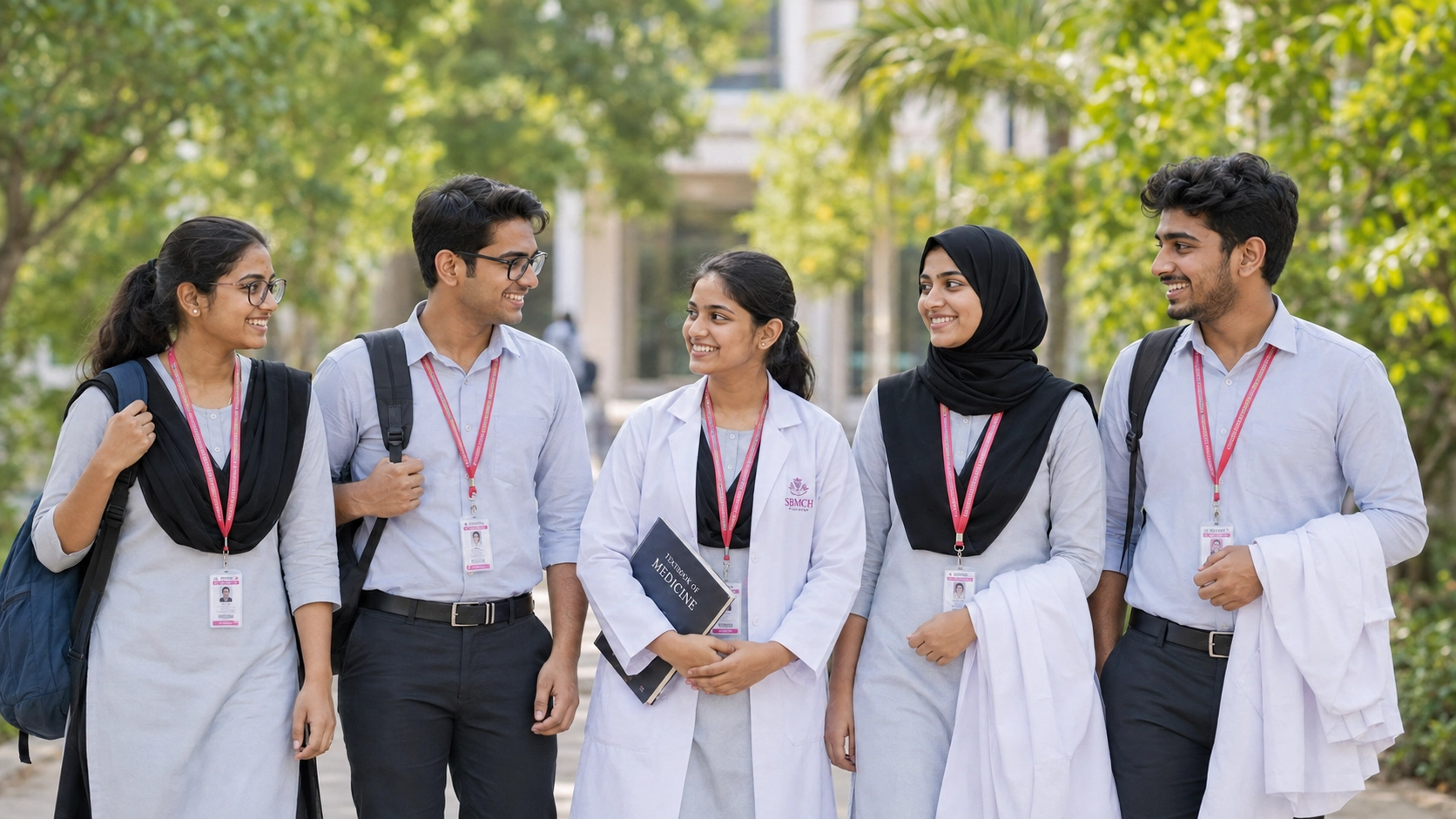
MBBS students on campus Students walking through the SBMCH campus Students with textbooks on campus

Career Opportunities

After MBBS

An MBBS graduate may explore several professional pathways after completing the programme, internship and applicable registration requirements:

  • Clinical medical practice
  • Postgraduate medical education
  • Government health services
  • Hospital and healthcare administration
  • Public health
  • Medical research
  • Medical education
  • Defence and institutional health services
  • Healthcare technology
  • Clinical documentation and medical communication

Eligibility for employment, independent practice or higher education remains subject to the prevailing regulations of the relevant authorities.

Important Information

Fee Information

Tuition fees, university fees, hostel charges and other applicable payments shall be collected according to the notifications issued by the Government, competent authority, affiliating university and institution for the relevant academic year.

Applicants should confirm the current fee structure from the official admission office before making any payment.

Why SBMCH

Why Choose SBMCH?

Integrated Academic Environment

Medical sciences, clinical learning and hospital-based training are brought together within one educational ecosystem.

Structured Clinical Exposure

Students progressively learn through supervised patient interaction, clinical postings and bedside discussions.

Experienced Teaching Team

Faculty members guide students through academic learning, practical demonstrations and clinical application.

Focus on Medical Skills

Skills-based education helps students develop confidence before performing procedures in clinical settings.

Community Orientation

Students gain an understanding of public health priorities and healthcare needs beyond the hospital.

Professional Values

Ethics, empathy, communication and accountability are embedded throughout the learning process.

Accessible Location

The institution is located on New Airport Road, Renigunta, Tirupati, with convenient access to the surrounding region.

FAQs

Frequently Asked Questions

The programme includes 4½ years of academic education followed by a one-year compulsory rotating medical internship, subject to the regulations in force.

The sanctioned annual intake is 150 students, subject to approvals applicable to the academic year.

Yes. Candidates must qualify in NEET-UG and participate in the authorised counselling process.

Sri Balaji Medical College, Hospital & Research Institute is affiliated with Dr. N.T.R. University of Health Sciences, Vijayawada.

Yes. MBBS is a full-time professional programme involving classroom instruction, laboratory work, clinical postings and hospital-based training.

Yes. Students must successfully complete the compulsory rotating medical internship as prescribed by the applicable regulations.

Students receive supervised clinical training through the attached teaching hospital and its clinical departments.

Applicants should contact the college admission office and refer to the official notifications issued for the relevant academic year.